
9 Proven Strategies for Powerful Conference AV Production Success
Discover how Conference AV Production delivers seamless events with professional audio, visuals, and hybrid solutions.
Introduction
Conference AV Production has become the silent force behind every successful event, shaping how audiences experience information, interaction, and engagement. From the moment a speaker steps onto the stage, every visual cue and every sound projection contributes to the overall perception. Oddly enough, when it works perfectly, no one notices. Yet when it fails, everyone does.
Modern conferences are no longer simple gatherings with a microphone and a projector. They are carefully orchestrated productions that blend technology, creativity, and precision. Delegates expect seamless presentations, crisp visuals, and flawless audio. Anything less feels outdated, almost jarring.
That said, many organisers still underestimate the complexity involved. It is not just about plugging in equipment and pressing play. It is about designing an experience that flows effortlessly from start to finish. This is where professional Conference AV Production proves invaluable.
Conference AV Production
Conference AV Production is the comprehensive planning, setup, and management of audio visual systems for conferences and corporate events. It includes sound systems, display technologies, cameras, lighting, and control systems, all working together to deliver a polished experience.
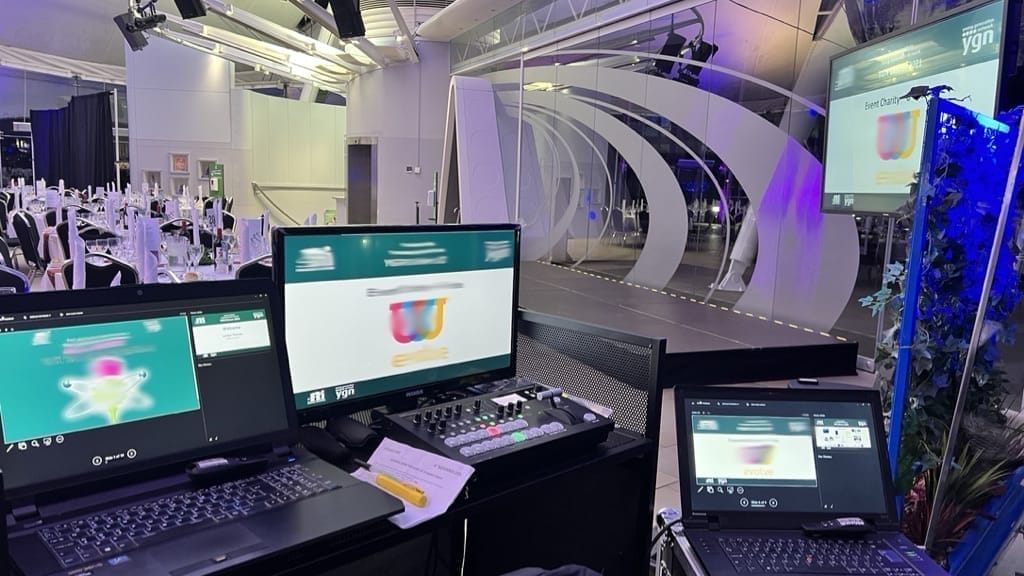
At its heart, Conference AV Production is about communication. Not simply delivering information, but ensuring it is understood, remembered, and acted upon. A well-produced conference can energise an audience, spark ideas, and create lasting impressions.
For example, using high-quality monitor screens ensures that every attendee, regardless of seating position, can clearly see presentations. Pair this with professional projector hire, and suddenly the visual impact increases dramatically.
Equally important is the integration of laptop hire solutions, allowing presenters to deliver content smoothly without compatibility issues. It sounds simple, but even minor technical hiccups can disrupt the flow of a session.
The Role of AV in Modern Conferences
Audio visual technology has transformed conferences into immersive experiences. Gone are the days of static presentations. Today, conferences incorporate video content, live streaming, and interactive elements.
Interestingly, while technology adds complexity, it also simplifies communication. A well-designed AV setup can convey ideas more effectively than words alone. Visual storytelling, supported by clear audio, creates a powerful combination.
Understanding Audience Expectations
Audiences have changed. They expect high-quality production values, similar to what they experience in digital media. Anything less can feel underwhelming.
This shift has raised the bar for Conference AV Production. Organisers must now consider not only the content but also how it is delivered.
Core Components of AV Production
Every conference relies on a combination of audio, visual, and control systems. Each component plays a vital role in the overall experience.
Professional Audio Systems
Clear audio is essential. Without it, even the most compelling presentation loses its impact.
Audio systems must be tailored to the venue, ensuring consistent coverage and clarity.
Visual Display Solutions
Visuals are equally important. High-quality screens and projection systems ensure content is visible and engaging.
Presentation Technology
Reliable presentation tools are critical. Using dedicated laptop hire reduces the risk of technical issues.
Camera and PTZ Systems
Capturing the event is essential, especially for hybrid conferences.
Explore camera options.
Hybrid Event Technology
Hybrid events combine in-person and virtual audiences.
See hybrid solutions.
They require advanced AV setups to ensure seamless integration.
Comfort Monitors for Speakers
Comfort monitors allow speakers to view their presentations without turning away from the audience.
Stage Timers and Speaker Management
Keeping sessions on schedule is crucial.
Delegate Microphone Systems
Structured discussions require reliable microphone systems.
Accessibility Solutions
Accessibility in Conference AV Production is not an optional extra, though it is sometimes treated that way. It should sit at the very centre of event planning, quietly ensuring that every attendee, regardless of ability, can fully engage with the content. When overlooked, the impact is immediate. Important messages are missed, participation drops, and the overall experience becomes fragmented. When done properly, however, accessibility feels seamless, almost invisible, yet incredibly powerful.
One of the most effective tools in this area is the use of induction loop systems. These systems are specifically designed to assist individuals with hearing impairments by transmitting audio directly to compatible hearing aids. Instead of struggling with background noise or poor acoustics, users receive clear, direct sound. It is a simple concept, yet the difference it makes is profound.
Implementing a professional induction loop system, such as those available through induction loop hire, ensures that speech is not just amplified, but truly accessible. This is particularly important in conference environments where clarity is essential. Panel discussions, keynote speeches, and audience Q&A sessions all rely on precise audio delivery. Without it, key messages can easily be lost.
More information on induction loop Standards and regulation.
Lecterns and Presentation Furniture
A professional setup includes appropriate presentation furniture.
Planning Conference AV Production
Planning Conference AV Production is where everything either comes together beautifully or quietly falls apart before anyone even notices. It is tempting, almost deceptively so, to think of AV as a last-minute checklist. A screen here, a microphone there, job done. But in reality, effective planning begins weeks, sometimes months, in advance.
Start with the purpose of the conference. Is it educational, promotional, or collaborative? Each objective shapes the AV requirements differently. A keynote-heavy event demands strong visual reinforcement through large displays and projection, while a panel-driven conference requires reliable microphone systems and clear audio distribution.
Audience size and profile also matter more than people assume. A small executive audience expects polish and subtlety, whereas a large public conference needs bold visuals and powerful sound to maintain attention. Ignoring this often leads to mismatched setups that feel either overwhelming or underwhelming.
Content plays a surprisingly critical role too. Video-heavy presentations require robust playback systems, often supported by dedicated laptop hire to avoid compatibility issues. Meanwhile, data-driven talks benefit from crisp, high-resolution displays such as professional monitor screens.
And then there is the timeline. Load-in schedules, testing windows, and rehearsals must all be carefully coordinated. Leave it too late, and suddenly small issues become big problems.
Planning, when done properly, feels almost invisible during the event. That is the paradox. The more effort you put in early, the less anyone notices later.
Venue Considerations
Every venue tells a story, though not always a helpful one. Some spaces are designed for conferences, with built-in rigging points, controlled lighting, and balanced acoustics. Others, charming as they may be, fight you at every turn.
Acoustics are often the first challenge. High ceilings and hard surfaces can create echo, making speech difficult to understand. In such cases, carefully positioned speakers and calibrated audio systems are essential. Without them, even the best presenter can sound distant and unclear.
Sightlines are another crucial factor. Columns, low ceilings, or awkward layouts can obstruct views. This is where additional screens or strategically placed displays become necessary. Relying on a single projection screen in a large or irregular space is a common mistake.
Lighting conditions also deserve attention. Natural light can wash out projected images, while dim environments may require additional stage lighting to keep speakers visible. Balancing these elements is not always straightforward, yet it is vital for maintaining visual clarity.
Power availability, oddly enough, is often overlooked. Insufficient or poorly located power sources can complicate setups and limit equipment placement. Planning for distribution and backup solutions avoids last-minute scrambling.
And then there is space. Not just for the audience, but for equipment, cabling, and technical teams. A cramped setup increases risk and reduces flexibility.
A venue is never just a backdrop. It is an active participant in Conference AV Production, sometimes cooperative, sometimes stubborn.
Technical Rehearsals
Technical rehearsals are the unsung heroes of successful conferences. Skipped too often, rushed too frequently, and underestimated almost always, they provide the only real opportunity to identify issues before the audience arrives.
During a rehearsal, every element should be tested. Audio levels are adjusted, ensuring microphones are clear without feedback. Visual content is checked for resolution, formatting, and compatibility. Video playback is verified, because what works on one device does not always behave the same on another.
Speakers benefit enormously from rehearsals, though some resist them. Standing on stage, using comfort monitors, and understanding timing tools such as stage timers builds confidence. It transforms uncertainty into familiarity.
Subtle but powerful additions, such as the Interspace Industries MicroCue3 presentation clicker featured on that page, allow presenters to move through slides confidently without relying on a technician. It seems like a small detail, yet it removes hesitation and keeps delivery smooth.
Camera setups, especially for hybrid events, must also be tested thoroughly. Using professional systems such as PTZ camera hire allows for smooth transitions and consistent framing, but only if properly configured.
Rehearsals also reveal the unexpected. A microphone that interferes with another. A slide that does not display correctly. A video file that refuses to play. Small issues, easily fixed in advance, can become major disruptions if discovered live.
It may feel tedious, even excessive, to run through everything. Yet, oddly enough, the more thorough the rehearsal, the calmer the event feels.
Live Event Management
When the conference begins, planning gives way to execution. Live event management is where Conference AV Production becomes a real-time operation, requiring focus, coordination, and quick decision-making.
A central control point is essential. From here, technicians manage audio levels, switch video feeds, control presentations, and monitor system performance. It is a delicate balancing act. Too much intervention can disrupt flow, while too little can allow issues to escalate.
Communication between the AV team and event organisers must remain constant. Changes happen, sometimes unexpectedly. A speaker runs over time. A session starts early. A last-minute video is introduced. Flexibility becomes critical.
Hybrid events add another layer of complexity. Streaming platforms, remote speakers, and online audiences must be managed alongside the physical event. Reliable hybrid solutions ensure both audiences receive a seamless experience.
Attention to detail matters enormously. A muted microphone, a delayed slide, or a poorly timed transition can break immersion. Conversely, smooth execution enhances professionalism and keeps the audience engaged.
Live management is not about reacting to problems. It is about anticipating them, quietly and efficiently.
Common AV Challenges
Despite careful planning, challenges still arise. That is the nature of live events. Technology, for all its advantages, is not immune to failure.
Audio issues are among the most common. Feedback, dropouts, or uneven volume can disrupt presentations. These problems often stem from poor setup or environmental factors, both of which can be mitigated with proper preparation.
Visual problems are equally frustrating. Screens may display incorrect resolutions, projectors can struggle in bright environments, and content may not appear as intended. Using reliable equipment such as professional projector hire reduces these risks.
Connectivity issues, especially in hybrid events, can cause delays or interruptions. Stable networks and backup systems are essential.
Human error also plays a role. Incorrect file versions, missed cues, or miscommunication can lead to awkward moments. Clear processes and rehearsals help minimise these risks.
Interestingly, many challenges share a common cause. Lack of preparation. Address that, and most problems become manageable.
Benefits of Professional AV Production
Investing in professional Conference AV Production delivers benefits that go far beyond equipment quality. It enhances the entire event experience, often in ways that are subtle yet powerful.
Reliability is perhaps the most obvious advantage. Professional systems are designed for performance and durability, reducing the likelihood of technical failures.
Expertise is equally important. Experienced technicians understand how to optimise setups, troubleshoot issues, and adapt to changing conditions. Their presence provides reassurance, even if their work remains largely unseen.
Engagement improves significantly with high-quality AV. Clear audio keeps audiences focused, while dynamic visuals maintain interest. Together, they create a more immersive experience.
There is also a branding element. A well-produced conference reflects positively on the organiser, reinforcing credibility and professionalism.
While it may seem like an added expense, professional AV production often proves cost-effective in the long run. Avoiding disruptions, enhancing engagement, and delivering a polished experience all contribute to better outcomes.
Trends in Conference AV Production
Conference AV Production continues to evolve, driven by technological innovation and changing audience expectations. Some trends, once considered optional, are quickly becoming standard.
Hybrid events are perhaps the most significant development. Combining in-person and virtual audiences, they expand reach and accessibility. However, they also require sophisticated AV setups to ensure seamless integration.
Interactive technology is another growing trend. Live polls, audience participation tools, and touchscreen displays encourage engagement and create a more dynamic environment.
Automation and AI are beginning to influence AV production as well. From automated camera tracking to intelligent audio mixing, these technologies enhance efficiency and consistency.
Visual design is also evolving. LED displays, high-resolution projection, and creative staging are used to create visually striking environments.
Interestingly, while technology advances rapidly, the goal remains the same. To communicate effectively and engage audiences.
Sustainability in AV
Sustainability is no longer a secondary consideration. It is becoming a central aspect of event planning, including Conference AV Production.
Energy-efficient equipment reduces power consumption without compromising performance. LED lighting, for example, uses less energy and generates less heat than traditional options.
Hiring equipment instead of purchasing also supports sustainability. It promotes reuse and reduces waste, aligning with environmentally conscious practices.
Logistics play a role as well. Efficient transport planning minimises emissions, while digital content reduces the need for printed materials.
There is, admittedly, a contradiction here. Advanced technology often requires resources, yet it also enables more sustainable practices. Balancing these factors is key.
Ultimately, sustainable AV production is about making thoughtful choices that reduce environmental impact while maintaining quality.
Measuring Conference Success
Measuring the success of a conference is not always straightforward. While attendance numbers provide a basic indicator, they do not tell the full story.
Engagement is a more meaningful metric. How actively did attendees participate? Were sessions well attended? Did audiences remain attentive? AV plays a significant role here, influencing how content is delivered and received.
Feedback is another valuable source of insight. Surveys and informal comments can reveal strengths and areas for improvement. Consistent praise for clear audio or engaging visuals often reflects effective AV production.
For hybrid events, digital metrics such as viewing time, interaction rates, and audience retention provide additional data.
Return on investment, though sometimes difficult to quantify, remains important. Successful conferences generate leads, strengthen relationships, and enhance brand reputation.
In the end, success is measured not just by what happens during the event, but by the lasting impact it creates.
Conference AV FAQs
What is Conference AV Production?
It involves the setup and management of audio visual systems for conferences.
Why is AV important for conferences?
It ensures clear communication and enhances audience engagement.
What equipment is needed for a conference?
Audio systems, display screens, cameras, and control systems are essential.
Can AV production support hybrid events?
Yes, modern AV setups are designed to support both in-person and virtual audiences.
How early should AV be planned?
Planning should begin well in advance to ensure availability and proper setup.
Do AV providers offer technical support?
Most professional providers include on-site support and troubleshooting.
Conclusion
Conference AV Production is more than just technology. It is the foundation of effective communication at events. From crystal-clear audio to immersive visuals, every element contributes to the overall experience.
While it may seem complex, the benefits are undeniable. A well-executed AV setup can transform a conference, making it more engaging, professional, and memorable. And although challenges may arise, careful planning and expert support can ensure success.
In the end, Conference AV Production is about creating connections. Between speakers and audiences, ideas and action, technology and experience.